
Downtown & History
History & Architecture
How a county seat's courthouse, commercial blocks and residential streets record the city's history — and where to find credible sources.
A county seat from the start
Union County was formed in 1842, and Monroe was established as its seat. The town took its name from President James Monroe. The courthouse square at its center set the pattern for downtown.
Downtown's built record
Commercial buildings around the square record the city's growth as a market and government center. The 1886 courthouse, with its 1922 wings, is the best-documented single building, listed on the National Register in 1971.
Residential architecture
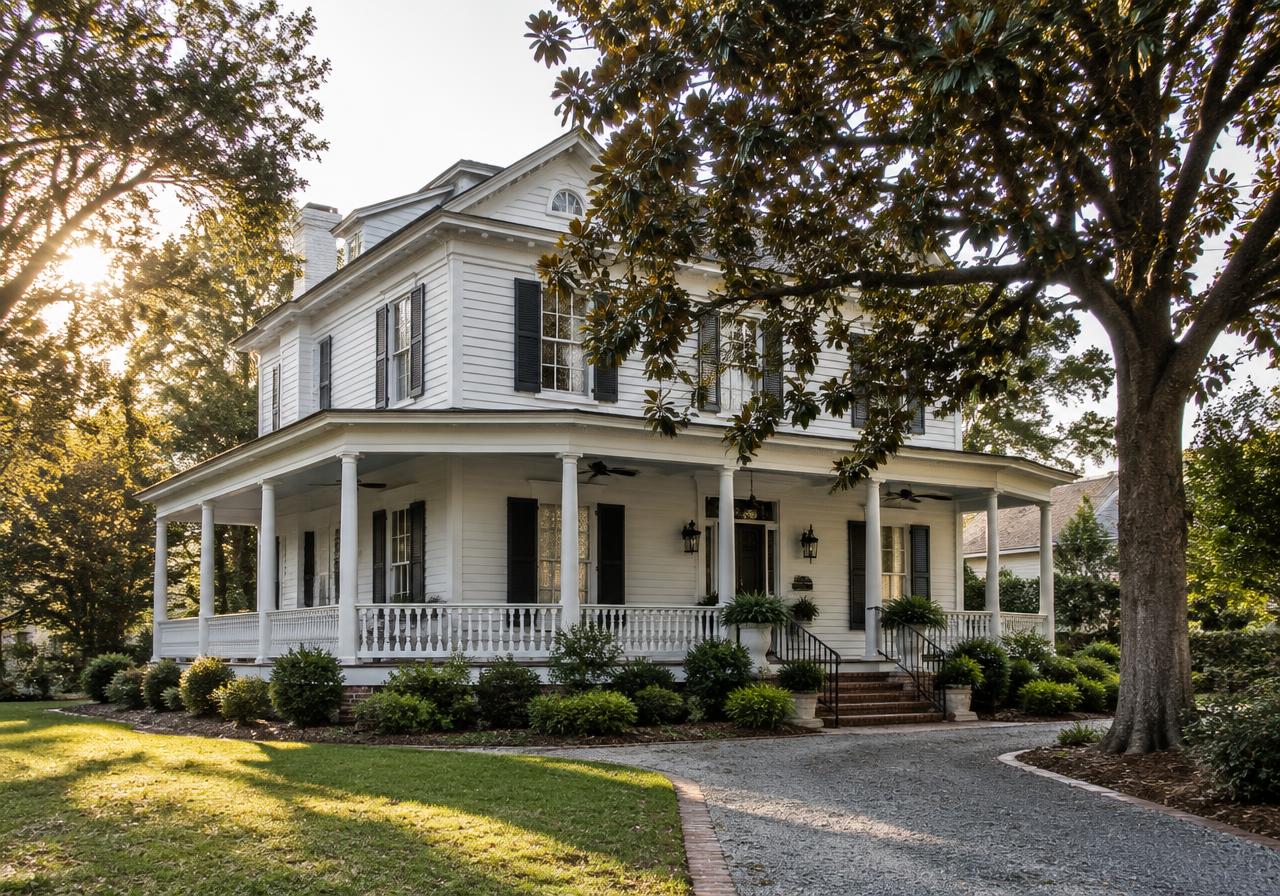
Streets near downtown include older houses in a range of late nineteenth- and early twentieth-century styles. Farther out are mid-century ranches, later subdivisions and contemporary homes. Style alone does not tell you a house's age, its condition or whether any historic designation applies.
Where to research
The North Carolina State Historic Preservation Office maintains National Register nominations and survey files. The Union County courthouse nomination is publicly available as a PDF. Local libraries and historical organizations hold additional records.
Read Monroe’s buildings without guessing their history
Begin with what can be observed from a public place, then use documentary sources to test any interpretation. A building’s materials or decorative details do not establish its exact age, architect or original use. Consult the cited historic material and ask the City of Monroe about relevant records when researching a particular property. Keep a distinction between a documented fact, an architectural impression and an unanswered question rather than turning visual similarities into a historical claim.
Plan a respectful architecture-focused visit
Choose a limited route around the downtown buildings or residential streets you want to understand and remain on public areas. Do not treat an older home as a visitor attraction or enter a porch, garden or interior without permission. Confirm any organized program with its operator. For public route and parking questions, start at monroenc.org; for a county building, check unioncountync.gov. Ask about access requirements in advance rather than assuming an older structure can meet every need.
Check designation before discussing renovation
If ownership or renovation is the goal, identify the exact parcel and ask City of Monroe planning staff what designation and review requirements apply. Separate National Register recognition from any local designation, and ask what proposed work would require review. Describe the actual project rather than asking a broad question about historic homes. Keep written guidance with inspections, permit research and property documents; architectural character alone does not establish either freedom from regulation or a particular approval requirement.
When contacting an official office or operator, state the exact destination, property or activity and the day or circumstances you are planning for. Ask which details are confirmed, which remain subject to change and where to find the current written instructions. Save the page link and your contact notes, then recheck time-sensitive arrangements before acting. If an answer concerns only one part of the plan, keep the remaining questions open rather than extending that answer to services, access or permissions it did not address.
Frequently asked
- Can appearance establish a building’s date?
- Not reliably. Use documented records for dates and original uses, and label any unresolved detail as a question rather than a fact.
- Are all older Monroe homes protected?
- No. Check the specific designation and applicable local requirements with the city. Age and architectural character alone do not answer the regulatory question.
- How should I visit residential architecture?
- View from public areas and respect private property. Obtain permission for entry or close access, and avoid treating a lived-in home as an open visitor site.
Sources and official resources
- North Carolina State Historic Preservation Office
- NC State Historic Preservation Office — Union County Courthouse nomination (PDF)
- National Park Service — National Register of Historic Places
Last reviewed October 18, 2026. Official resources change; confirm current details at the source.
Your Next Chapter
Where to Go From Here
Bring the conversation from architecture to interiors with Emerald Oak Design.
Explore Interior Design (opens emeraldoakdesign.com in a new tab)- Peters Custom Homes — Ground-up custom builds and whole-home renovations.Build & Renovate (opens peterscustomhomes.com in a new tab)
Affiliated businesses in our network.
Our Network
More Places to Explore
The story of Nicholas and Miriam Peters and their Charlotte-area work.
These are websites in our own network, not independently selected third-party recommendations.
Compare
Monroe, Lake Park, Wingate or the county?
See how jurisdiction changes services, permits and recreation.
Compare PlacesLast reviewed October 18, 2026 · Monroe Living Editorial