
The Monroe Guide
Monroe, North Carolina: The Complete Guide
Union County's seat, a downtown with its own history, a wide range of residential settings — and a set of address-level details worth understanding before you decide anything.
Understanding Monroe
Monroe is an incorporated city and the county seat of Union County, North Carolina. It has its own elected council, its own city departments and its own municipal boundary. It is not a Charlotte neighborhood and not a suburb in the sense of being part of another municipality — Charlotte is a regional destination roughly to the northwest, reached by U.S. 74 or the Monroe Expressway.
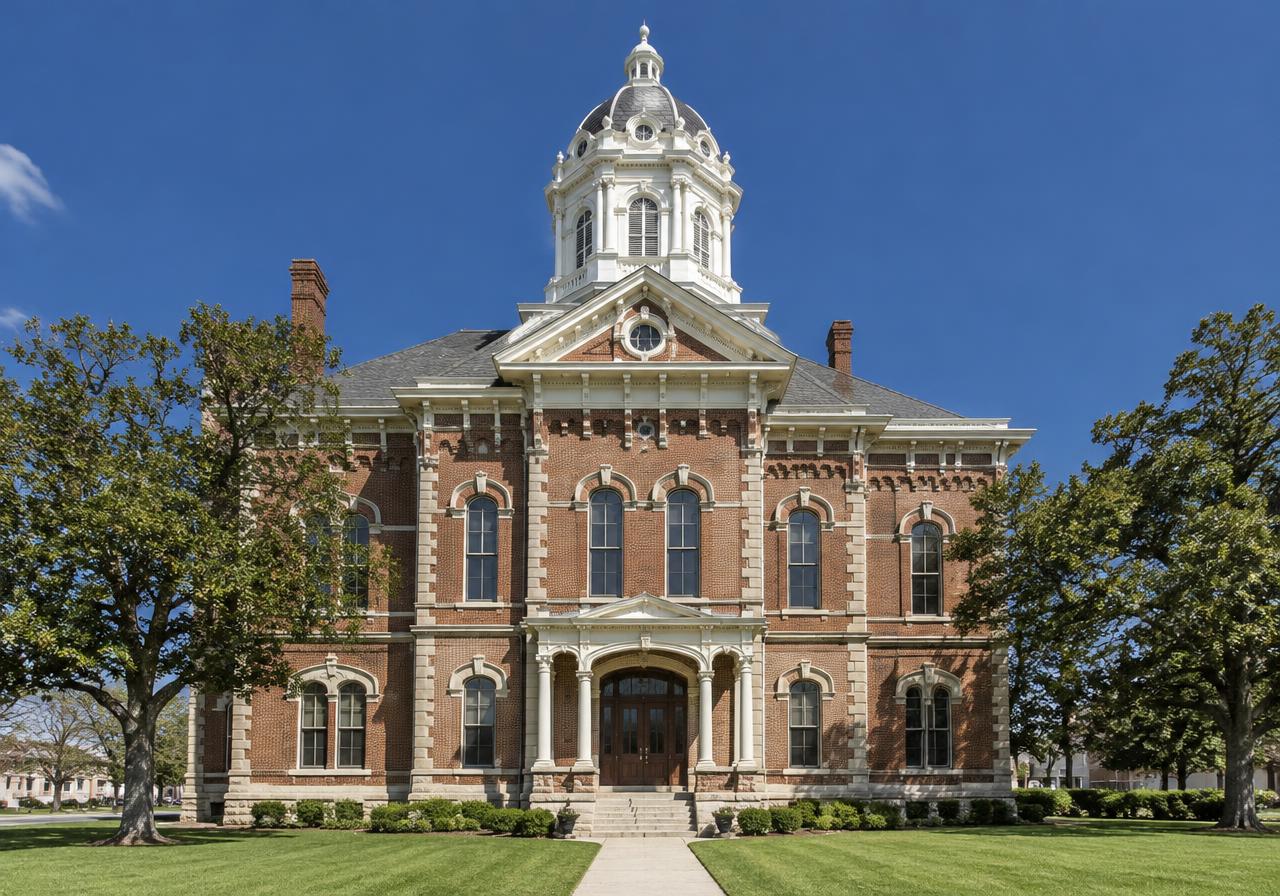
The city grew around a courthouse square laid out for the new county in the 1840s. The present historic courthouse dates to 1886. Around it, a grid of downtown streets holds brick commercial buildings, churches and civic buildings; beyond it are residential streets from many decades, industrial and employment areas, newer subdivisions and, farther out, land that is still rural in character.
That variety is the most useful thing to understand about Monroe. A single name covers very different daily experiences, and a Monroe mailing address can sit inside or well outside the city itself.
City limits and mailing addresses
The U.S. Postal Service assigns 'Monroe, NC' to addresses across a broad area of Union County. Many of those addresses are not inside the City of Monroe. A parcel outside city limits may be in unincorporated Union County or, in some areas, in another municipality entirely.
Whether a parcel is inside city limits affects municipal property taxes, which government handles zoning and land use, who provides water, sewer, trash collection and in some cases electricity, which police agency responds, and which rules apply to building and renovation. School assignment is a separate question handled by Union County Public Schools.
Treat the mailing address as a delivery label, not as evidence of jurisdiction. Our guide to city limits and addresses explains how to confirm each item for a specific parcel.
County-seat context
As the county seat, Monroe is where many Union County government functions are based, including county administration and the courts. That brings government employment and a steady flow of visitors downtown on weekdays.
It also means several important public buildings sit close together and are easy to confuse. The historic 1886 courthouse on the square is not where most current court business happens, and county offices, city hall and judicial facilities are separate buildings. Always confirm the correct building and entrance on the official county or city website before a visit.
Downtown
Downtown Monroe centers on the courthouse square and the blocks of Main, Franklin, Jefferson, Hayne and nearby streets. It is listed as the Monroe Downtown Historic District, and the historic courthouse is a contributing building. Expect brick storefronts, local restaurants and shops, churches, offices and civic buildings within a compact, walkable area.
Our downtown guide covers how the square is organized, where to start on a first visit, and how to find current events and parking information from official sources.
History and architecture
Monroe's built history ranges from the late-Victorian courthouse and downtown commercial blocks to early twentieth-century houses on nearby streets, mid-century ranches and contemporary construction. The Union County Courthouse was listed on the National Register of Historic Places in 1971.
An older house is not automatically protected, and a National Register listing does not by itself impose the same rules as a local historic district. Our historic homes guide explains the difference.
Residential settings
We describe residential Monroe by setting rather than by invented neighborhood names: established streets close to downtown, mid-century and later subdivisions, newer construction on the edges of the city and in surrounding areas, attached housing where it exists, and larger lots and acreage farther out.
Named subdivisions and communities do exist, but we only publish a named guide once we can verify its identity, location and housing from reliable sources.
Housing types
- Older single-family homes, some with historic architectural character.
- Mid-century brick ranches and split-levels on established streets.
- Newer single-family homes in planned subdivisions.
- Townhomes and other attached housing in some locations.
- Rural homes and acreage, frequently outside city limits.
- Vacant land and lots, which need careful due diligence before purchase.
New construction
New homes are built in and around Monroe by production builders, custom builders and individual owners. Pricing, specifications, included features, completion dates and HOA arrangements vary by builder and by phase. A rendering or model is not a completed home; ask what is under construction, what is complete and what is only proposed.
Land and larger lots
Union County still has meaningful rural acreage, and some of it carries a Monroe address. Acreage invites assumptions — about animals, workshops, second dwellings or subdividing — that zoning, recorded restrictions, septic suitability and road access may not support. Our land guide walks through the research.
Dining and shopping
Downtown offers local, independent dining and shopping. Everyday retail, grocery stores and chain restaurants concentrate along U.S. 74 (Roosevelt Boulevard) and other main corridors. Our Eat & Discover section lists only businesses we have verified.
Public recreation
The City of Monroe operates five parks, open to the public from dawn to dusk, along with recreation centers and the Bearskin Greenway. The Dickerson Recreation Complex near downtown includes a greenway section, an 18-hole disc golf course, a picnic shelter, a playground and a recreation center. Union County also operates parks in the wider area.
Transportation
U.S. 74 is the main route through Monroe toward Charlotte. The Monroe Expressway is a parallel toll road — paid electronically with an NC Quick Pass account or by mailed invoice at a higher rate. Neither route guarantees a particular travel time. Charlotte-Monroe Executive Airport serves general and business aviation; scheduled airline service is at Charlotte Douglas International.
Schools and services
Public schools are operated by Union County Public Schools, which assigns students by exact address. Utilities and services depend on whether a parcel is inside city limits. Confirm both with the providers directly; do not rely on a listing description or proximity.
Nearby municipalities
The Village of Lake Park and the Town of Wingate are separate incorporated municipalities with their own governments. Neither is a Monroe neighborhood. Indian Trail, Stallings, Matthews, Waxhaw, Weddington, Marshville and others are also distinct towns in the region.
Property research checklist
- 01Confirm city-limits status and jurisdiction for the exact parcel with Union County GIS and the City of Monroe.
- 02Confirm assigned schools by exact address with Union County Public Schools.
- 03Identify the water, sewer (or septic), electric, gas and trash providers for the parcel.
- 04Check the FEMA flood map for the specific lot.
- 05Read any recorded restrictions, easements and HOA documents.
- 06Confirm zoning and permitted uses with the governing jurisdiction.
- 07Test the drive to your actual destinations at the times you would travel, with and without tolls.
Frequently asked
- Is Monroe part of Charlotte?
- No. Monroe is a separate incorporated city and the county seat of Union County. Charlotte is in Mecklenburg County.
- Does a Monroe address mean I'm in the City of Monroe?
- Not necessarily. Many Monroe mailing addresses are outside city limits. Confirm jurisdiction for the specific parcel.
- Is the Monroe Expressway free?
- No. It is an all-electronic toll road. NC Quick Pass account holders pay a lower rate than drivers who receive a mailed invoice.
- Does Monroe's airport have airline flights?
- Charlotte-Monroe Executive Airport serves general and business aviation. Scheduled passenger airline service is at Charlotte Douglas International Airport.
Sources and official resources
- City of Monroe — official website
- Union County, NC — official website
- Union County Public Schools
- City of Monroe — Parks
- NC Quick Pass — Monroe Expressway toll information
- City of Monroe — Charlotte-Monroe Executive Airport
- National Park Service — Union County Courthouse (NRHP 71000620)
- FEMA Flood Map Service Center
Last reviewed October 18, 2026. Official resources change; confirm current details at the source.
Your Next Chapter
Your Next Chapter
Getting to know Monroe is the first step. When you're ready to look at homes, Peters Team Realty and Your Leader in Luxury can help.
Connect with Peters Team Realty (opens petersteamrealty.com in a new tab)- Your Leader in Luxury — Buying, selling, and representation at the luxury level.Real Estate (opens yourleaderinluxury.com in a new tab)
Affiliated businesses in our network.
Our Network
More Places to Explore
Our guide to Indian Trail, NC.
Our guide to Matthews, NC.
Our guide to Wesley Chapel, NC.
These are websites in our own network, not independently selected third-party recommendations.
Compare
Monroe, Lake Park, Wingate or the county?
See how jurisdiction changes services, permits and recreation.
Compare PlacesLast reviewed October 18, 2026 · Monroe Living Editorial